The ‘bad leader’ trap
Today we are once again caught in what I would like to call the “bad leader trap”, a recurring pattern in international politics in which the downfall – or at times illegal elimination – of a villainised ruler is treated as a triumph for freedom, while the deeper political realities that produced that ruler remain largely untouched.
The trap is deceptively simple. A leader somewhere in the world develops a reputation as authoritarian, corrupt or repressive. Their record becomes widely known: democratic institutions are hollowed out, critics silenced, protests suppressed and the independent press censured. When such a leader is challenged, removed, arrested or killed, the moment is framed as a victory for freedom.
The moral clarity of that narrative is seductive. A bad leader has fallen. Justice, it seems, has been served.
Yet this clarity often blinds us to far more complicated questions about international law, geopolitical consequences and the long-term futures of the societies involved.
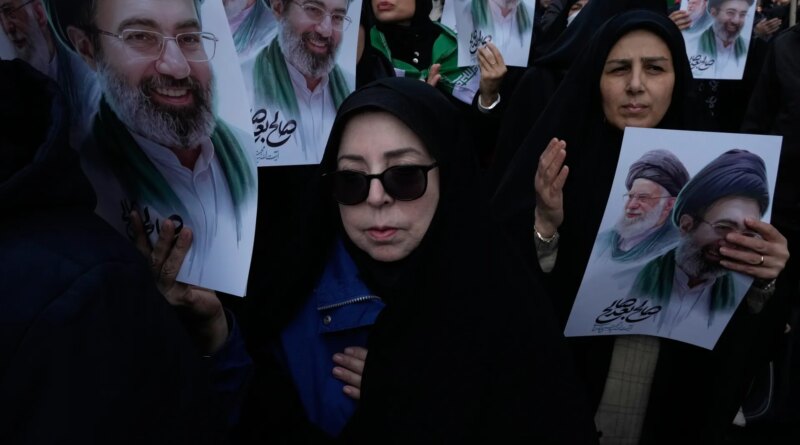
Take the recent killing of Iran’s second Supreme Leader, Ayatollah Ali Khamenei, during the ongoing US–Israel strikes on Iran. Few would dispute the repressive nature of his 36-year leadership.
The brutality of the Iranian state has been on display for decades. Since late December, authorities have violently suppressed nationwide protests demanding “fundamental and structural change, including a full transition to a democratic system that respects rights and human dignity.”
Human Rights Watch reported that Iranian security forces used tear gas, batons and metal pellets fired from shotguns against unarmed protesters, as well as lethal force including military-grade weapons. Security forces even raided hospitals to arrest injured protesters and confiscate the bodies of those killed.
The world saw this repression vividly in 2022 when 22-year-old Mahsa Amini was detained by Iran’s morality police for allegedly violating compulsory veiling laws. She was taken into custody, beaten and later died. Her death sparked the Jin, Jîyan, Azadî protests, “Women, Life, Freedom”, which were again met with lethal force and the use of the death penalty as a tool of political repression.
None of this is in dispute. Khamenei’s record fits the familiar portrait of the “bad leader.”
But the problem lies in what happens next.
In Western political discourse, bad leaders, especially those in the Global South, serve a very particular purpose. When politically convenient they can be put forward as symbols of everything that is wrong with the world beyond the West. Their repression becomes a convenient counterpoint in narratives about who “we” are: champions of democracy, freedom and human rights.
Even when bad leaders emerge from within the West itself, they are often treated as anomalies.
Take Hungary’s Prime Minister Viktor Orbán. His steady erosion of democratic institutions and press freedom is frequently described as inconsistent with “European values,” as though Europe’s own political history had not repeatedly produced similar illiberal turns. Or consider Donald Trump, whose xenophobic rhetoric and attacks on democratic norms are regularly framed as an aberration in American politics rather than as part of a longer tradition of exclusionary politics in the United States.
In other words, the bad leader narrative is not only about condemning authoritarianism elsewhere. It is also about preserving a comforting image of ourselves.
When the moment becomes politically opportune, this same narrative makes the bad leader an easy and justifiable target.
In March 2003, US President George W Bush launched the invasion of Iraq with the stated aim of removing Saddam Hussein from power. The Bush administration spent months building public support by claiming that Iraq possessed weapons of mass destruction and had links to terrorist groups responsible for the September 11 attacks.
Neither claim was ever substantiated.
Yet when those arguments collapsed, another justification remained readily available: Saddam Hussein was undeniably brutal. Images of his statue being toppled in Baghdad’s Firdos Square and Bush’s carefully staged “Mission Accomplished” speech aboard the USS Abraham Lincoln reinforced the idea that a great moral victory had been achieved.
But the victory was not what it seemed. What followed was not democracy in the way it had been promised, but years of instability, conflict and violence. The invasion created conditions that helped give rise to ISIS (ISIL) and contributed to civilian deaths exceeding 200,000.
The bad leader had fallen. The geopolitical consequences were only beginning.
A similar logic has surfaced more recently.
Earlier this year, after the Trump administration launched military strikes in Venezuela and abducted President Nicolás Maduro and his wife Cilia Flores from Caracas, transporting them to New York to face narcoterrorism charges in a Manhattan federal court, many observers questioned the legality of the move and the precedent it might set.
Yet many were also quick to return to Maduro’s record as a bad leader.
One commentator described him as a figure who “combined swaggering incompetence with ruthless repression.” British politician Priti Patel declared that “we are not shedding any tears whatsoever.”
Perhaps not. But the absence of sympathy does not resolve the legal or geopolitical questions raised by such an action.
Following the strike that killed Khamenei and several members of his family, a similar reaction emerged. Once again the focus quickly returned to the catalogue of abuses committed under his rule.
My point is not to question that record.
Rather, the problem lies with the euphoria that often surrounds the “taking down” of the bad leader, and the way that euphoria can make us blind to a wider context of norms, ethics, laws and geopolitical consequences.
It is easy to declare that the bad leader is indeed bad. It is far more difficult to ask what follows.
What does it mean for Venezuela’s democratic transition if the regime’s bureaucracies and security structures remain intact while external powers appear primarily concerned with securing oil interests and economic leverage?
What does it mean for Iran’s democratic future if a military campaign begins with airstrikes that reportedly strike civilian infrastructure? Can a democratic transition truly emerge from a campaign designed and executed primarily by foreign military powers? To what extent can we truly believe that such campaigns are about freedom and democracy?
And when Western leaders suddenly discover concern for human rights abroad, how seriously should we take those claims?
When Donald Trump encourages Australia to grant asylum to members of Iran’s women’s national football team, labelled “traitors” by Iranian state television for refusing to sing the national anthem, he presents himself as a defender of dissidents.
Yet the same administration has overseen immigration raids, visa bans and harsh asylum policies at home.
These contradictions are not incidental. They are central to how the bad leader trap functions.
By focusing attention on the villainy of individual rulers, the broader systems surrounding them, and the interests shaping international responses, often fade from view.
The removal of a single leader does not dismantle a security apparatus, rebuild institutions or produce democratic culture overnight. In many cases, it simply creates a power vacuum, new instability and a fresh cycle of geopolitical competition.
We have seen this pattern repeatedly across the Middle East and beyond.
Recognising the trap does not mean defending authoritarian rulers or ignoring the suffering they cause. It means refusing the comforting simplicity of the narrative.
If the international order truly claims to be governed by values, democracy, human rights and the rule of law, then those principles cannot be invoked selectively only when confronting geopolitical rivals.
Otherwise the bad leader trap will continue to repeat itself: a familiar cycle of outrage, intervention and celebration, followed sooner or later by the instability and geopolitical fallout left behind.
The views expressed in this article are the author’s own and do not necessarily reflect Al Jazeera’s editorial stance.