BAFTA-Winning Director Lakshmipriya Devi On Boong
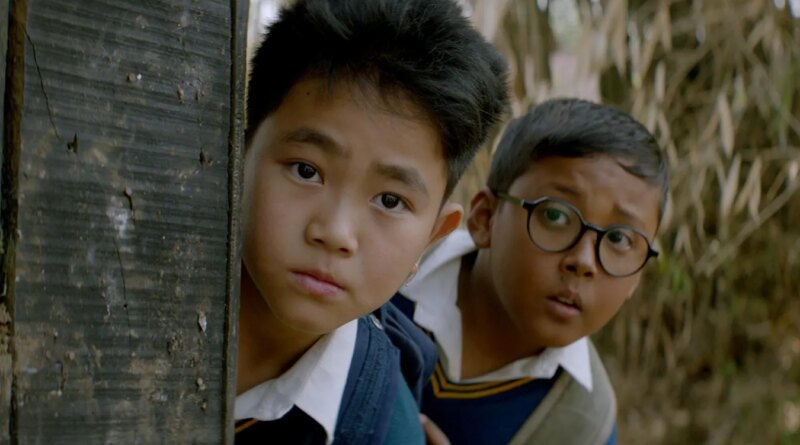
A still from BAFTA-winning Manipuri film ‘Boong’.
excel entertainment
Lakshmipriya Devi had convinced herself that Stupid (pronounced bung) would be her first and last film. On a rare sunny Wednesday morning in London, hours before the BAFTA Film Awardsthe first-time director cried “like a maniac” in her hotel room, overwhelmed by memories of the journey that brought her Manipuri-language feature to Britain’s most prestigious film ceremony.
By evening, she was walking to the stage at London’s Royal Festival Hall to accept the BAFTA for Best Children’s and Family Film, beating out Disney’s Zootopia 2 and Lilo & Stitch in a category dominated by major studio blockbusters.
“When Paddington said ‘Boong,’ I was like, ‘what?'” Devi told me in her first interview after the win. “Everything went black. I was in a vacuum. I don’t think I even hugged Alan [McAlex, her producer]. I don’t even remember.”
LONDON, ENGLAND – FEBRUARY 22: Ritesh Sidhwani, Alan McAlex, Farhan Akhtar and Lakshmipriya Devi accept the Children’s & Family Film Award for ‘Boong’ during the EE BAFTA Film Awards 2026 at The Royal Festival Hall on February 22, 2026 in London, England. (Photo by Stuart Wilson/BAFTA/Getty Images for BAFTA)
Getty Images for BAFTA
The Manipuri-language coming-of-age drama, the title of which translates to ‘little boy’ in Manipuri, tells what Devi describes as an “urban folktale”, a deeply personal story drawn from her childhood memories about a young boy’s quest to reunite his family amid the social and political tensions in Manipur.
“Everyone told me not to make Stupidto do a Hindi film because I’ve worked in the Hindi film industry for so long,” said Devi, who spent years as an assistant director on major Bollywood productions including Lakshya, PKand A Suitable Boy. “If I listened to them, I would have never made Stupid. You have to listen only to yourself.”
Manipur’s Own Reality
Meitei refugees arrive to board a paramilitary truck at a transit point after being evacuated from the violence that hit Churachandpur, near Imphal in the northeastern Indian state of Manipur on May 9, 2023. More than 50 people have been killed in the hilly border region in clashes between the majority Meitei people, who are mostly Hindus, and the mainly Christian Kuki tribe. Thousands of troops have been deployed to restore order, while around 23,000 residents have fled their homes for the safety of ad-hoc army-run camps for the displaced. (Photo by Arun SANKAR / AFP) (Photo by ARUN SANKAR/AFP via Getty Images)
AFP via Getty Images
The film’s themes of displacement and ethnic tension took on devastating real-world resonance after production wrapped. Shortly after filming concluded, violence erupted across Manipur in May 2023, leading to widespread displacement and the deaths of over 200 people. Many of the child actors in Stupid, including those who had portrayed displaced children on screen, found themselves among the thousands of internally displaced people in real life.
The cruel irony was not lost on Devi when she took the BAFTA stage Wednesday night.
Emotional BAFTA Speech
LONDON, ENGLAND – FEBRUARY 22: Lakshmipriya Devi accept the Children’s & Family Film Award for ‘Boong’ during the EE BAFTA Film Awards 2026 at The Royal Festival Hall on February 22, 2026 in London, England. (Photo by Tristan Fewings/BAFTA/Getty Images for BAFTA)
Getty Images for BAFTA
In her acceptance speech at the Royal Festival Hall, Devi addressed the ongoing displacement of children in Manipur and called for peace in the troubled region.
“We pray for peace to return to Manipur,” Devi said in the speech. “We pray that all the internally displaced children, including the child actors in the film, regain their joy, their innocence, and their dream once again.”
When I asked how people can help displaced children in the region, Devi pointed to existing resources: “At the click of a button, all the help, all the platforms, all there. Including what our music director has done, funding education of the children in displacement camps.”
The speech appears to have been removed from both BBC UK and BAFTA’s official Instagram pages.
An Unexpected Journey From Mumbai To The BAFTAs
Devi’s path to directing began in 2018, during a period away from Bollywood when she was caring for her father and aunt in Mumbai. After years commanding film sets of 300-400 people as an assistant director, the isolation proved creatively transformative.
“I felt so in tune with myself. And I used to write a lot, just for myself,” she explained. “You can only do that when you’re not with too many people, which is what happens when you’re working on a set. You can’t connect with yourself in that kind of environment.”
She wrote the script for Stupid in 2018, but COVID-19 derailed production plans in 2020. Needing work, she returned to the Hindi film industry before eventually securing funding through an unexpectedly smooth process that defied typical independent film struggles.
“I sent the script to my friend [Chalkboard Entertainment’s] Vikesh Bhutani. He budgeted it. The next morning, he called me and asked, ‘can I produce it?’” Devi recalled. Through Bhutani, producer Alan McAlex, and major production house Excel Entertainment, led by Farhan Akhtar and Ritesh Sidhwani, the film found backing. “Sorry, it was not like a struggle story,” she laughed.
The ease of finding producers contrasts sharply with the resistance Devi faced regarding the film’s content and language. Making a Manipuri-language film about Northeast India challenged industry assumptions about commercially viable cinema.
“I always thought, it’s not like I’m asking them to marry me. Maximum they’ll say no, right?” Devi said of first-time filmmakers’ general hesitation to approach big production houses. “If they say yes, great. If they say no, it’s not going to kill me.”
A Different Approach To Filmmaking
Working on Stupid meant deliberately rejecting many conventions Devi observed in mainstream Indian cinema. Her mantra: “Low-fi has always been my thing. Keep it as simple as possible.”
When asked what she avoided from Bollywood productions, she immediately says budget management. “Not ‘waste money,’ but not spend like how it is done in Hindi films. When it becomes a big budget, it actually is not anyone’s fault [but] I was very clear that I wanted to be economical.”
She cited independent directors like Nandita Das and Mira Nair as inspirations for proving economical filmmaking works.
The small crew allowed Devi to take actors to locations before shooting to rehearse and block scenes, a luxury impossible on large productions. “I wanted my actors to feel at home in the house. I wanted the mother to set up the house like they live there. That’s not possible with big crews.”
Working with child actors, often considered challenging, became Devi’s favorite part of production. “They’re so spontaneous. They have no filter, children. I like that honesty. You’re not going to hear ‘Auntie, the scene is nice.’ If it’s not going to work, they’ll stop it. They’ll be like, ‘why?’ They ask such pure, innocent, honest questions.”
She gave special recognition to Gugun Kipgen, the young actor who plays the titular character Boong, for learning an entirely new language (Meitei) for the role. “Even for adults, it’s so difficult to learn a new language as well as emote at the same time. Without him, I could not have made it. Everybody else was good, but I wanted to give a special shout-out to him.”
The BAFTA Night
Alan McAlex, Farhan Akhtar, Lakshmipriya Devi and Ritesh Sidhwani win the Children’s & Family Film Award for “Boong” at the 2026 EE BAFTA Film Awards held at The Royal Festival Hall on February 22, 2026 in London, England. (Photo by James McCauley/Variety via Getty Images)
Variety via Getty Images
Wednesday’s ceremony marked Devi’s first major film award, first BAFTA attendance, and first time experiencing the intensity of high-profile recognition. Despite appearing composed during her acceptance speech, she described the experience as surreal.
“I literally had an outer body experience once in the hall,” she said. “I used to perform a lot on stage before in terms of dance. I haven’t done that in decades. You know how it is when you climb onto a stage? The lights are in your face. It’s very scary. I haven’t felt that in decades.”
She spotted Leonardo DiCaprio in the front row and Her Royal Highness Princess Kate, whom she adores, though respected celebrities’ privacy by not approaching them. “I just felt like I wanted [DiCaprio] to be my friend or something. Some weird thing happened. And I just spoke. I didn’t feel fear after that.”
Meeting the jury chair after her win provided the evening’s most meaningful moment. “He just came up and said, ‘I’m the chair of the jury and I was so happy you were selected,'” Devi recalled, still processing the encounter. “It was a blur. It was a crazy situation.”
The film industry’s response was overwhelmingly positive. “Everyone was congratulating us. It was like everyone was so happy for us, maybe because we were a complete underdog. Nobody had heard of Stupid. But so many people said they really want to watch the film.”
What Comes Next
Stupid premiered at the Toronto International Film Festival in 2024 before screening at festivals including Warsaw, MAMI Mumbai, and the International Film Festival of India. It received a limited theatrical release in India and select UK cities with large Manipuri populations, including Leicester. Following the BAFTA win, Devi is coy about a wider re-release, but hopes for one.
As for her future in filmmaking, Devi remains uncommitted to directing as a career. “I thought that Stupid was going to be my first and last film. But if I have a story to tell, I’ll make a film,” she said. “I don’t want it to be a job that I have to now direct. It’ll kill the joy completely. I’ve been in this field for way too long. I want to enjoy the filmmaking process. If it’s something I really want to tell… it cannot become a job. Simply not.”
She’s even open to returning to assistant director work. “I don’t mind. There’s no point [in directing] if I don’t have a story.”
For aspiring filmmakers from Northeast India facing similar industry skepticism, Devi’s advice echoes the philosophy that made Stupid possible: “Just make it. Just go for it. Don’t think that, oh, I don’t have an audience. I don’t have this. I don’t have that. If I thought of that, I would have never made Stupid. Too much overthinking kills.”
She pointed to the thousands of film festivals worldwide as pathways for independent voices. “You don’t need somebody to be a mentor. You just need to believe in yourself and go for it. You can in the click of the internet sign up. Festivals are the best friends for small films.”
Wednesday night proved that philosophy right. As Devi walked through London with the morning sun breaking through, hours before learning she’d won a BAFTA, she’d felt good. “It was a good day.”