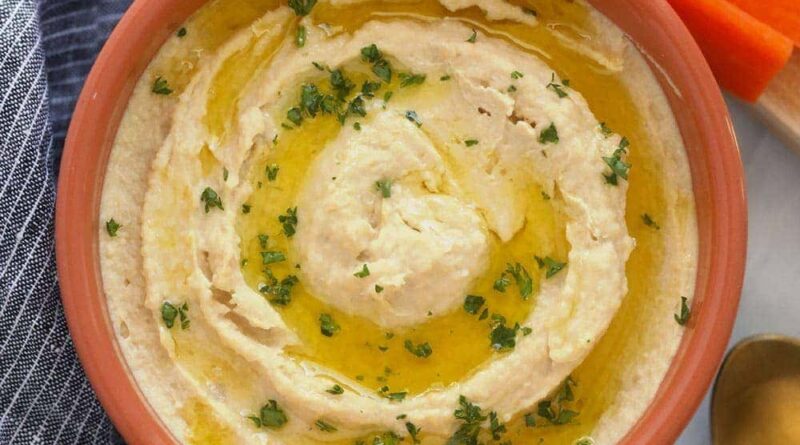
How to Make Hummus
If you love hummus as much as I do, get ready to wow your taste buds. This lemon garlic hummus is creamy, tangy, and just the right amount of garlicky. It’s perfect for dippingspreading, or even stirring into a salad or pasta.
I love how simple it is. A few pantry staples, a high-speed food processor, and a handful of minutes result in the best hummus recipe I’ve ever made at home. Bonus: it’s tastier than store-bought hummus, and you can jazz it up with whatever toppings you like!
This lemon garlic hummus is simple, fast, and full of flavor:
- Ultra-creamy texture: A high-speed food processor blends the chickpeas, tahini, and olive oil into a dreamy hummus.
- Quick and simple: I can have it ready in just 5 minutes with minimal effort. It takes more time to go to the grocery store!
- Naturally vegan and gluten-free: Wholesome ingredients make it friendly for almost any diet, with bonus nutrients like calcium and potassium.
- Versatile and customizable: This creamy hummus is perfect for dipping, spreading, dolloping, or garnishing with pine nuts or feta cheese.
Key Ingredients
The best hummus comes together with just a few simple ingredients, but each one is essential for flavor and texture:
- Chickpeas (garbanzo beans): These are the base of any good hummus. I drain and rinse a can of chickpeas to skip the extra time needed for dried beans.
- Tahini: This sesame paste adds that classic nutty flavor. Using unsalted tahini gives full control over the salt level.
- Olive oil: I use a good-quality extra-virgin olive oil for a silky texture. It’s what makes the hummus feel indulgent without being heavy.
- Garlic: Raw garlic gives a bright, punchy flavor, but roasted garlic works beautifully if I want something milder and sweeter.
- Lemon juice: Fresh lemon juice adds a zesty lift that balances the richness of the tahini and olive oil with some added vitamin C.
- Sea salt: Just a pinch enhances all of the flavors without overpowering them.
- Water: I start with a little and add more as needed to thin out the hummus to the perfect puree.
- Food processor: A high-speed food processor will provide that smooth and creamy texture.
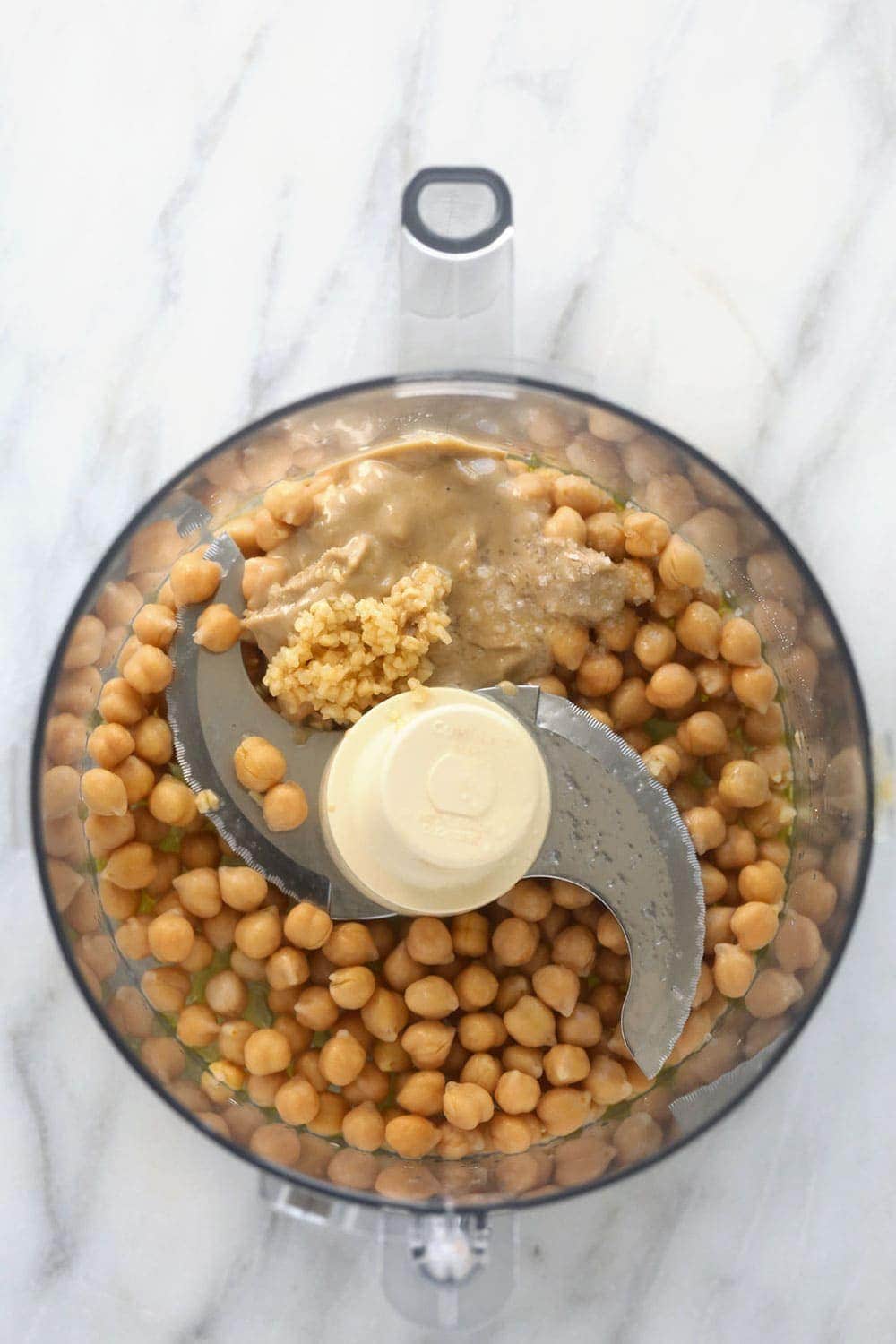
About Tahini
Tahini is a key ingredient in classic hummus. Where did hummus come from? People have enjoyed it for centuries across Middle Eastern and Mediterranean traditions. It also has roots in Lebanon, Israel, and Egypt. What started as a simple chickpea and tahini dip has now become a staple worldwide.
This creamy sesame paste adds a rich, nutty flavor and gives the hummus that silky, smooth texture I love. It also balances the lemon and garlic, making the dip more rounded and satisfying.
That said, you can make hummus without tahini. I sometimes swap in plain Greek yogurt for a creamy texture, or almond, cashew, or peanut butter to keep the nuttiness in the finished dip. Just keep in mind that tahini is traditional for a reason. For a more classic hummus, I wouldn’t skip it!
How to Make This Hummus Recipe
Making homemade hummus is easy. Here’s my step-by-step process, with a few tips for the creamiest dip:
- Prep the chickpeas. Drain and rinse canned chickpeas. For an extra-smooth hummus, pinch the skins off each chickpea. It’s a bit time-consuming, but the texture is worth it.
- Add ingredients to the food processor. Place the chickpeas, tahini, garlic, olive oil, lemon juice, salt, and water into a high-speed food processor. I like to start with the minimum amount of water and add more as needed once I’m blending.
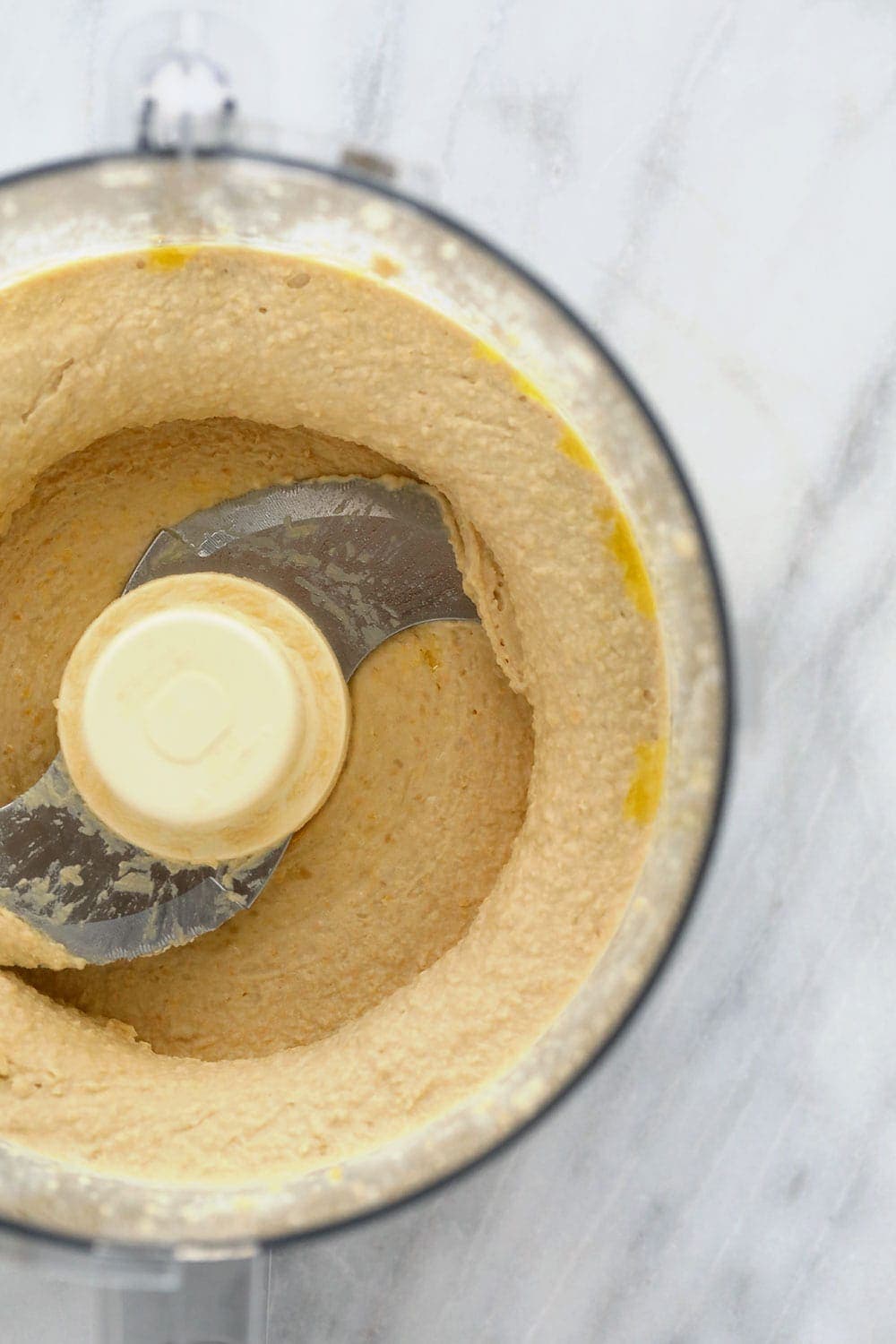
- Blend until smooth. Process on high for 1-2 minutes or until the hummus is creamy. Stop occasionally to scrape the sides so everything blends evenly. Add a little more water if it seems too thick.
- Serve or store. Serve hummus immediately with toppings like herbs, paprika, or pine nuts, or store it in an airtight container in the fridge for up to 5 days. I’ve found the flavors get even better after a few hours!
Wondering about how to make hummus without a food processor? If you don’t have one, a strong blender works, but be ready to stop and scrape down the sides a few times.
This lemon garlic hummus is delicious on its own, but there are so many ways to switch things up depending on what you’re in the mood for or what’s in the pantry. I have it most often with a drizzle of olive oil and chopped parsley or fresh basil, but here are a few more ideas:
- Toppings for flair: A sprinkle of paprika, sesame seeds, toasted pine nuts, roasted garlic cloves, or crumbled feta can add layers of flavor. I love how feta adds a salty, tangy punch that pairs perfectly with the lemon and garlic.
- Spice it up: Add a pinch of cayenne, ½ teaspoon ground cumin, sumac, or red pepper flakes to give the hummus a spicy or earthy kick. For a bolder flavor, blend in a roasted red pepper or chipotle pepper.
- Herb additions: Fresh parsley, cilantro, or dill, stirred in after blending, brighten the flavor. I sometimes add a mix of herbs for a garden-fresh twist.
- Creative mix-ins: Fold in extras like sun-dried tomatoes, chopped olives, sliced cherry tomatoes, or caramelized onions.
Don’t be afraid to experiment! Once a favorite combo clicks, it becomes a go-to hummus flavor that’s perfectly yours.
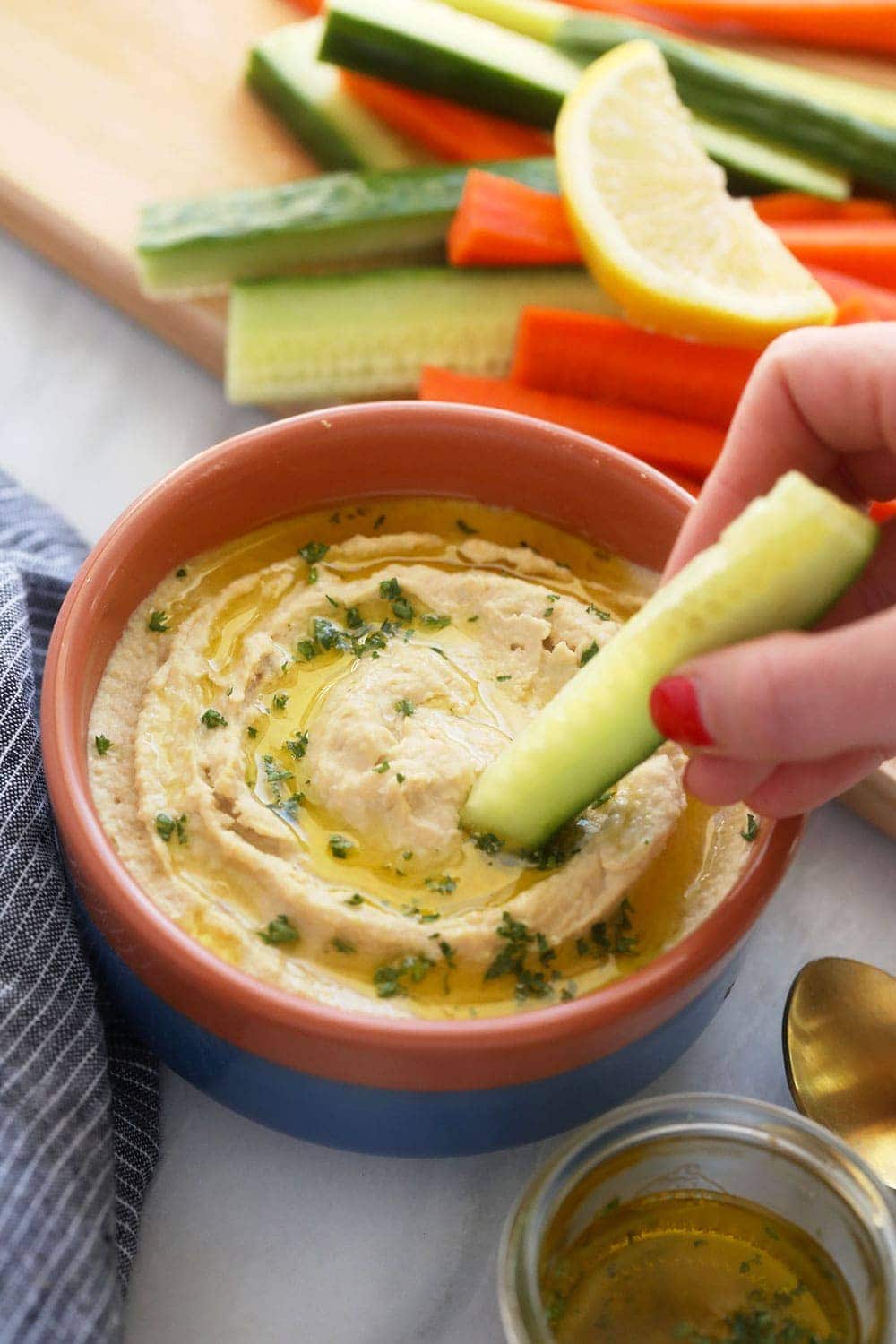
One of the reasons I love this hummus so much is how versatile it is. It works as a dip, an addition to a mezze platter with other appetizers, or even stirred into a sauce. Here are some of my favorite ways to serve it:
- Classic dipping: There are endless dipping options for homemade hummus. Warm pita bread, pita chips, crackers, pretzels, cheese, or fresh veggies like carrots, cucumbers, and bell peppers are all delicious.
- Sandwich spread: Forget the mayo and mustard and use hummus as a condiment for a sandwich! It gives any sammie amazing flavor and texture.
- Pasta sauce: Hummus is a perfect base for a pasta sauce. Simply fold it into the pasta as a healthy alternative to a creamy sauce.
- Bowl topper: Add a big scoop to a grain bowl for extra flavor and plant-based protein. It pairs well with my Mediterranean Vegan Buddha Bowl or Butternut Squash Harvest Bowl.
- Dressing upgrade: Whisk hummus into salad dressing to thicken it up or thin it out with a little olive oil and vinegar to make my Herby Hummus Dressing. I like hummus dressing on my Mediterranean Quinoa Salad or Couscous Salad.
- Falafel combo: Hummus and falafel are a match made in heaven. Use it as a dip or spread it inside a pita with falafelfresh veggies, and herbs.
Store this hummus in an airtight container in the fridge for up to 5 days. If it thickens after chilling, stir in a splash of water to bring it back to that creamy, dippable texture. A quick re-blend can add extra smoothness, too.
I don’t recommend freezing hummus, as the texture can become grainy or separate once thawed. If you do freeze it, let it thaw in the fridge overnight and stir well or re-blend before serving.
How can I make my hummus extra creamy?
For ultra-creamy hummus, using a high-speed food processor or high-powered blender makes the biggest difference. Peel the chickpeas before blending for extra creaminess, too. It takes a few extra minutes, but removing the skins noticeably improves the texture.
If hummus still feels thick, add 1-2 tablespoons of water and blend again. Once you reach the right consistency, it should be smooth and easily dippable.
What does baking soda do when using canned chickpeas?
Baking soda helps break down the outer skins of chickpeas, making them softer and easier to peel. Simmer them for 10-15 minutes with a pinch of baking soda to further soften them. This works for canned chickpeas as well!
Just be sure to rinse them well after simmering to remove any baking soda residue before blending. It’s not a must-do for this recipe, though.
How do you cook chickpeas from scratch for hummus?
If I’m starting with dried chickpeas for my homemade hummus recipe, I soak them overnight in plenty of water. The next day, I drain and rinse them, then simmer in fresh water for about 60-90 minutes, or until they’re very soft. For hummus, softer is better.
Why shouldn’t you eat hummus after 7 days?
Homemade hummus doesn’t contain preservatives, so it has a shorter shelf life than store-bought versions. After about 5 days in the fridge, the risk of spoilage increases. Pay attention to any sour smell, separation, discoloration, or mold. Toss it if something doesn’t seem right. It only takes a few minutes to make a fresh batch!
-
Place all ingredients for the hummus into a high-speed food processor.
-
Process on high for 1-2 minutes or until smooth.
-
Optional: Add 1-2 more tablespoons of water, depending on the texture of your hummus. It should be smooth and easily dippable.
-
Serve immediately or refrigerate for 3-5 days.
*The amount of water used depends on the texture of the hummus. Water thins out the dip, so add more as needed.
Serving: 1 /8 recipe, Calories: 328 kcal, Protein: 6 g, Fat: 27 g, Fiber: 5 g, Sugar: 3 g
Nutrition information is automatically calculated, so should only be used as an approximation.