Impact Of Zuckerberg’s Testimony Is Truly Meta
The trial lawsuit against Meta and Google argues that Instagram and YouTube were designed to keep teens engaged at the expense of their mental health, prioritizing user engagement over the devastating human toll of social media addiction. This trial could decide whether social media companies can be sued for how their apps and algorithms are designed, not just for what users post.
AFP via Getty Images
Lawsuit Tests the Limits of Social Media’s Longstanding “Liability Shield”
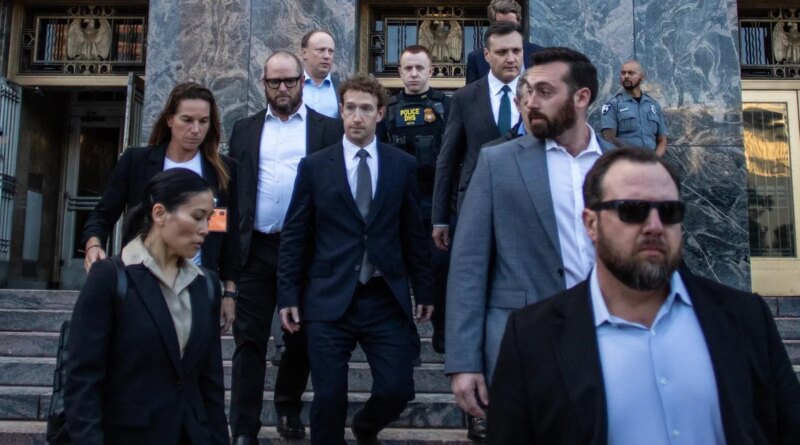
Mark Zuckerberg, chief executive of Meta, took the witness stand this week in Los Angeles, California at a landmark civil trial that could reshape how social media platforms are held accountable for alleged harm to young users’ mental health.
This particular case — one of thousands of similar cases working their way through the United States court systems — centers on claims by a 20-year-old plaintiff, identified as KGM, who alleges that Meta’s Instagram and Google’s YouTube were deliberately engineered to keep children and teens engaged, contributing to addiction-like behavior and long-term mental health struggles. The theory has been likened by legal analysts to “Big Tobacco” lawsuits, with jurors weighing whether design features like algorithmic feeds, autoplay, and other engagement tools played a driving role in the alleged harm.
Zuckerberg defended Meta’s business practices during his testimony, repeatedly rejecting the notion that Instagram is designed to addict young people. He told jurors that the platform prohibits children under 13, acknowledged challenges related to enforcing age limits, and said that Meta has introduced tools aimed at identifying and removing underage accounts.
In one particularly notable exchange, Zuckerberg testified that he reached out to Apple CEO Tim Cook to discuss collaboration on child safety and teen wellbeing. According to Zuckerberg, the conversation focused on how platform companies and device makers could coordinate parental controls and age-appropriate safeguards, calling the matter “an industry-wide issue” that “requires cooperation.”
Beyond the sensationalism of Zuckerberg’s testimony, this trial raises several novel legal issues, and the outcome will likely have far-reaching implications across social media.
Social media platforms like Instagram and YouTube have long relied on the “liability shield” contained in Section 230 of the Communications Decency Act of 1996. Section 230 has protected online platforms against liability for third-party user content. The law enables websites, apps, and social media companies to host and moderate content (by removing harmful posts while leaving others up) without being treated as the publisher or speaker of that content. As a result, the Section 230 “liability shield” provides that platforms like Facebook, X, and YouTube are generally not liable for defamation, or other harmful content posted by users.
History of Section 230
In the late nineties, Congress created a sweeping liability shield to let online services host and moderate third-party speech without being treated like news publishers, fueling the beginnings of the modern internet economy.
getty
In 1996, as Congress scrambled to regulate a rapidly expanding internet, lawmakers inserted 26 words into a telecommunications overhaul that would shape the digital economy for decades. Codified at 47 U.S.C. § 230, or simply “Section 230,” declared that “[n]o provider or user of an interactive computer service shall be treated as the publisher or speaker of any information provided by another information content provider.” With that sentence, Congress created what courts and commentators have come to call the internet’s “liability shield.”
Thirty years later, Section 230 of the Communications Decency Act remains one of the most consequential—and contested—laws governing the online world. It has insulated platforms from lawsuits over user-generated defamation, harassment, and other harmful content. It has also become the focus of bipartisan criticism and renewed legal challenges, including the ongoing civil trial targeting Meta and Google over the design and amplification features of Instagram and YouTube.
At stake in that litigation—and others like it—is whether Section 230’s shield extends not just to hosting user speech, but to the algorithmic systems and product design choices that increasingly shape how that speech spreads.
Origins of the Shield
Section 230 emerged from a specific legal problem. In the early 1990s, courts struggled to determine whether online services should be treated like bookstores, which generally are not liable for the content they carry, or publishers, which can be held responsible for defamatory material.
In Stratton Oakmont v. Prodigy (N.Y. Sup. Ct. 1995), a New York court held that Prodigy could be treated as a publisher—and thus potentially liable for defamation—because it had moderated user posts. Lawmakers feared that ruling would discourage online services from removing harmful material, effectively penalizing “good Samaritan” moderation.
Representatives Chris Cox and Ron Wyden drafted Section 230 to reverse that incentive. Subsection (c)(1) immunized platforms from being treated as publishers of third-party content. Subsection (c)(2) separately protected voluntary efforts to restrict objectionable material. Congress declared that it was U.S. policy “to promote the continued development of the Internet” and “to encourage the development of technologies which maximize user control.”
Early Judicial Expansion
Over time, courts interpreted Section 230’s protections very broadly, so most lawsuits over harmful user posts got dismissed early, which is now being tested in this trial as social media algorithms have been proven to do more than just “host” content.
Getty Images for Court Accountability
Courts quickly interpreted Section 230 broadly. In Zeran v. America Online, Inc., the U.S. Court of Appeals for the Fourth Circuit held that AOL could not be held liable for defamatory messages posted by an anonymous user, even after it had been notified of the posts. The court reasoned that imposing distributor liability would undermine Congress’s intent to shield platforms from the burdens of publisher-style lawsuits.
Zeran became the foundation for decades of expansive immunity. Courts routinely dismissed claims seeking to hold platforms liable for user posts involving defamation, negligence, and even certain state-law torts, so long as the content was created by a third party.
More recently, however, plaintiffs have tested whether algorithmic recommendations—rather than passive hosting—fall outside Section 230’s scope. In Gonzalez v. Google LLC, the U.S. Supreme Court considered whether YouTube’s recommendation algorithms could expose Google to liability under federal anti-terrorism law. While the Court ultimately declined to narrow Section 230 and resolved the case on other grounds, the justices signaled growing interest in the statute’s reach.
Section 230 in Practice Today
For companies like Meta and Google, Section 230 remains foundational. Instagram and YouTube host billions of user posts and videos. Without immunity from publisher liability, each potentially defamatory or unlawful post could trigger costly litigation.
Under prevailing interpretations, Section 230 protects platforms when: (1) they are providers of an interactive computer service; (2) the claim treats them as a publisher or speaker; and (3) the information at issue was provided by another content provider.
Courts have generally held that algorithmic sorting and recommendation systems do not transform platforms into “content creators.” Instead, they are seen as traditional editorial functions—akin to a newspaper deciding which letters to print. Content moderation decisions, including removing or demoting posts, are also protected under subsection (c)(2).
But critics argue that modern platforms do more than passively host speech. Their algorithms actively amplify certain content, often optimizing for engagement, watch time, or advertising revenue.
The Los Angeles Trial: A New Front
Plaintiffs argue recommendations, autoplay, and engagement loops are independent corporate conduct that materially contribute to harm, while defendants counter that ranking and organizing content is core protected functionality.
getty
In the ongoing Los Angeles civil trial against Meta and Google, plaintiffs contend that Instagram and YouTube are not merely neutral conduits. They argue that the companies designed recommendation systems and engagement features—such as autoplay and push notifications—to maximize user retention, including among minors.
Central to the plaintiffs’ argument is that these design choices constitute independent corporate conduct, distinct from third-party speech. By algorithmically promoting specific content, they argue, the platforms are effectively co-developers of harmful material and should not enjoy Section 230 immunity.
Defense attorneys for Meta and Google counter that recommendation algorithms are inherent to organizing vast amounts of content. They argue that treating such functions as outside Section 230 would eviscerate the statute, exposing platforms to liability for virtually every ranking or display decision.
Legal scholars are divided. Some contend that algorithmic amplification represents a qualitatively different act from mere hosting, potentially justifying narrower immunity. Others warn that drawing such distinctions would create uncertainty and chill online speech.
What a Plaintiff Victory Could Mean
If the plaintiff prevails and a court narrows Section 230’s scope, the consequences could reverberate across the tech industry.
Algorithmic Recommendation Systems: A ruling that targeted recommendations fall outside Section 230 could expose platforms to claims that their algorithms materially contributed to harm. Companies might redesign recommendation engines to reduce personalization or engagement optimization.
Platform Design Features: Features like infinite scroll, autoplay, and notification prompts could face heightened scrutiny. Plaintiffs may argue that such mechanisms constitute negligent product design rather than protected publishing activity.
Corporate Liability Exposure: Without broad immunity, platforms could face increased litigation risk. Even unsuccessful lawsuits can be costly, potentially prompting more aggressive content filtering or moderation.
Advertising-Based Revenue Models: Most social media companies rely on targeted advertising driven by engagement metrics. If algorithmic amplification becomes a liability risk, platforms may rethink how they monetize attention.
Industry advocates warn that narrowing Section 230 could disproportionately harm smaller platforms lacking resources for extensive legal defense. Critics counter that greater accountability and user protections is long overdue
Legislative and Regulatory Prospects
Congress has repeatedly debated reforming Section 230. Proposals range from conditioning immunity on compliance with transparency standards to carving out exceptions for certain harms. None have passed, reflecting deep partisan divides.
A judicial narrowing of Section 230 could catalyze legislative action. Lawmakers might codify clearer boundaries around algorithmic amplification or impose federal standards for platform design. Federal agencies, including the Federal Trade Commission, could also expand scrutiny under consumer protection authority.
Free Speech and Innovation at a Crossroads
If Section 230 gets narrowed, platforms may change how feeds work and how they police content, but it could also mean more lawsuits and more online speech censorship.
Los Angeles Times via Getty Images
Supporters of Section 230 argue that it underpins free expression online. By shielding platforms from publisher liability, the statute allows diverse user speech to flourish. Civil liberties groups warn that weakening immunity could incentivize over-removal of controversial content.
Others argue that the statute, drafted in the dial-up era, did not anticipate today’s AI-driven recommendation systems. They contend that recalibrating immunity would not end online speech but rather align legal responsibility with modern platform power.
The debate ultimately centers on a core question: when does a platform stop being a host and start becoming an active participant in shaping harmful content?
As the Los Angeles trial unfolds, the answer may begin to take shape—not only in courtrooms, but in Congress and boardrooms across Silicon Valley. Nearly three decades after its enactment, Section 230 stands at a pivotal juncture. Whether it remains the sturdy liability shield of the internet’s early years, or evolves to reflect the realities of algorithmic amplification, could determine the future architecture of digital speech in the United States.