At least 37 killed in Nigeria mine carbon monoxide poisoning: Reports
Illegal mining is a widespread issue in Nigeria, where operations lack both government oversight and safety protocols.
Published On 19 Feb 2026
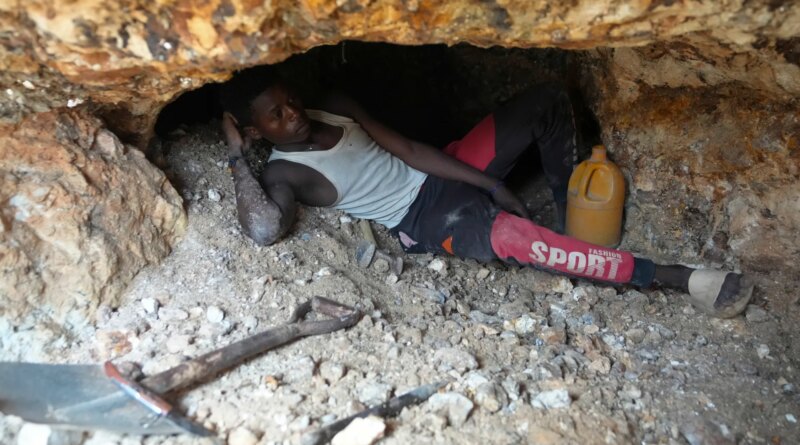
At least 37 miners have died from carbon monoxide poisoning at a mining site in central Nigeria, the Reuters news agency reports.
The deadly incident, which took place on Wednesday morning in the Kampani community in the Wase area of Plateau State, also resulted in the hospitalisation of 25 people, Reuters said, citing a police source and a security report the news agency obtained.
Recommended Stories
list of 3 itemsend of list
Government officials identified the location as a dormant lead mine where accumulated minerals had released lethal fumes.
The Plateau State government said many were feared dead without providing an exact figure, adding that others were receiving treatment in nearby hospitals.
Security forces have cordoned off the site to prevent further access.
Nigeria’s Minister of Solid Minerals Dele Alake said that the accident occurred when local villagers, unaware of the toxic nature of the emissions, reportedly entered the tunnel to extract minerals and inhaled the gas.
Illegal mining remains a widespread concern in Nigeria, where extractive operations frequently lack both government oversight and basic safety protocols.
The federal government in Nigeria has ordered an immediate suspension of all mining activities in areas near the accident site to allow for a comprehensive investigation, Reuters said.
Plateau State is a historical mining region, with its capital, Jos, known as the Tin City, though mining activities have slowed in recent years.
Several similar accidents have killed miners in Nigeria previously, including at least 18 people killed last year in Zamfara State in the northwest of the country after a boulder crashed onto an illegal mine during heavy rains.
The pursuit of mineral wealth across the African continent continues to be shadowed by a recurring cycle of mining disasters, as recent tragedies highlight the persistent dangers of both legal and irregulated operations.
An estimated 200 people were killed in a collapse at the Rubaya coltan mine in eastern Democratic Republic of the Congo last month.
The mine, located some 60km (37 miles) northwest of Goma city, the provincial capital of North Kivu province, collapsed after a landslide.
Rubaya produces about 15 percent of the world’s coltan, which is processed into tantalum, a heat-resistant metal that is in high demand by makers of mobile phones, computers, aerospace components and gas turbines.