Keir Starmer calls for western alliance to be ‘remade’
Unlock the Editor’s Digest for free
Roula Khalaf, Editor of the FT, selects her favourite stories in this weekly newsletter.
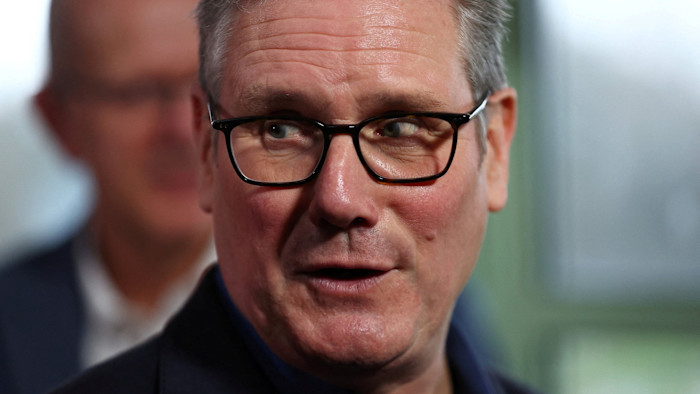
Sir Keir Starmer will warn Europe must move away from over-dependence on the US for its security and accept greater “burden sharing” as he signalled the western alliance must be “remade”.
The UK prime minister will use a speech at the Munich Security Conference on Saturday to set out his appetite for closer integration between Britain and Europe on defence.
He will call for a new multilateral defence initiative that could oversee joint weapons procurement and drive down the costs of rearmament, as first reported by the FT.
“We are not the Britain of the Brexit years anymore. Because we know that, in dangerous times, we would not take control by turning inward — we would surrender it. And I won’t let that happen,” Starmer plans to say.
He will set out a vision of security for the continent that involves “greater European autonomy” and “does not herald US withdrawal but answers the call for more burden sharing in full, and remakes the ties that have served us so well”.
The common theme at the Munich conference, during a crowded series of meetings and speeches, was the erosion of the international order and the rise of great power politics in the wake of a year of Donald Trump’s tumultuous presidency.
Other European leaders largely called for Europe to strengthen its own defence capabilities while also calling for a reset with the US — a clear response to the tensions in the wake of the crisis over Greenland.
German Chancellor Friedrich Merz declared the old world order overbut called for “repairing and reviving” the transatlantic relationship. “A gap has opened up between Europe and the United States,” he said. Meanwhile, US secretary of state Marco Rubio skipped a crucial meeting with European leaders on Ukraine in what was widely regarded as a snub.
In his speech, Starmer will acknowledge Washington’s defence posture is evolving, following the publication last December of the US national security strategy.
London and other European capitals must now seek to build a more integrated defence capability, he will say, arguing the continent’s fragmented defence industrial base and drawn-out procurement mechanisms have fuelled duplication and left gaps.
He will highlight Britain’s deals to supply Norway with frigates and Turkey with Typhoon fighter jets, as well as London’s collaboration on next-generation long-range missiles with Berlin, Rome and Paris — while stressing that more must be done as the threat from Russia increases.
In particular, he will set out his appetite to participate in joint initiatives with European partners to accelerate new defence investment and ensure additional cash is used most effectively, Downing Street said.
At present “Europe is a sleeping giant” with defence capabilities that add up to less than the sum of its parts, Starmer will say, while stressing that collectively the economies of the continent are 10 times bigger than Russia’s.
Hinting that he will be forced to commit more money to defence, despite the UK’s straitened finances, he will say: “We must level with the public and build consent for the decisions we will have to take to keep us all safe.”
The UK military is facing a funding gap of up to £28bn over the next 10 years and an impasse over how to plug the gap has repeatedly delayed the publication of the government’s defence investment plan, which was initially due last autumn.
UK defence secretary John Healey told journalists at the summit that military ties were as strong as ever despite the political turbulence. “Europe stepping up doesn’t mean the US is stepping back.”
The Conservatives lashed out at Starmer’s plans for closer co-operation with Europe. “Keir Starmer has a habit of handing away sovereignty and now he is once again rolling the pitch for greater EU integration and less control for the UK,” Tory shadow foreign secretary Priti Patel said.
Starmer will also use his speech as an opportunity to hit out obliquely at the Reform UK and the Green parties over their stances on defence.
“It’s striking that the different ends of the spectrum share so much. Soft on Russia and weak on Nato — if not outright opposed,” the prime minister will say.
Reform UK leader Nigel Farage has been criticised for saying in 2014 that he “admired” Russian President Vladimir Putin as an “operator”. Farage’s allies insist the remarks are outdated and have been taken out of context.
Zack Polanski, leader of the Greens, supports Britain withdrawing from Nato, though it is not party policy. “Donald Trump has so much domination within Nato that I don’t believe it’s possible to reform Nato from within,” he told the Guardian last month.