Former Seahawks QB Matt Hasselbeck Has A Family Heart Warning For You
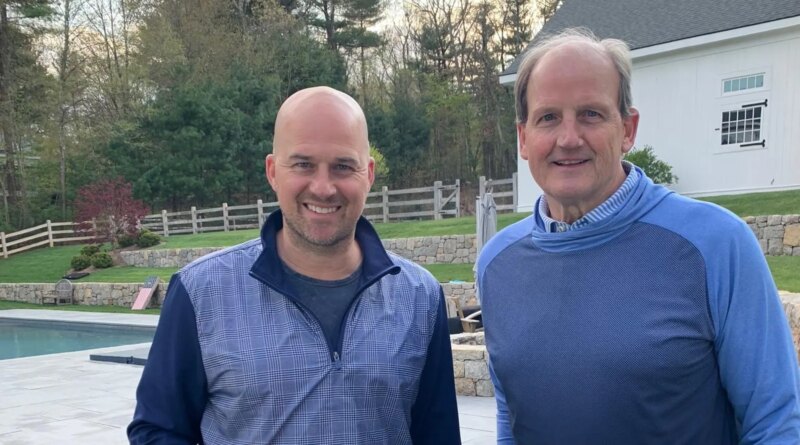
Three-time Pro Bowl and former Seattle Seahawks QB Matt Hasselbeck is seen here with his father, former New Patriots tight end Don, who passed away April 2025 from a cardiac arrest. (Photo: Courtesy of Matt Hasselbeck)
Courtesy of Matt Hasselbeck
This Sunday’s Super Bowl LX between the New England Patriots and Seattle Seahawks will be kind of a family affair for Matt Hasselbeck. The Patriots were where his father Don spent most of his tight end playing NFL career from 1977 through 1983. Meanwhile, the Seahawks went to their first ever Super Bowl in 2006 with Matt himself quarterbacking them.
Leading up to the Super Bowl, the three-time Pro Bowl QB who spent a decade with the Seahawks is trying raise awareness about another family affair—screening for heart disease risk. After Hasselbeck’s father shockingly suffered a cardiac arrest and passed away last April, Hasselbeck’s mother urged her son to get tested for different heart disease risks. And the results surprised Hasselbeck, motivating him to make some changes and partner with the Family Heart Foundation for their “Tackle Cholesterol: Get into the LDL Safe Zone” campaign.
Hasselbeck’s Father Passed Away Last April From A Cardiac Arrest
In a recent conversation, Hasselbeck told me about how unexpected his father’s passing was: “My dad was like the healthiest. I mean, he was Superman. He played in the NFL. He won a Super Bowl with the Raiders.” Hasselbeck added, “He was fit. People thought he was my brother, not my dad. He looked great. He was active. He lifted weights.”
Well, Bryan Adams may have sung, “Look into my heart, you will find, there’s nothin’ there to hide” in the 1991 song (Everything I Do) I Do It For You. But you really can’t see from the outside all that may be going on in a person’s heart and cardiovascular system. “One day as he was getting ready to mow his lawn, he had a heart attack and didn’t survive it,” Hasselbeck. “And my mom kind of got on me and my two younger brothers, and she was like, ‘Hey, listen, I really think it’s important that you guys get, get screened, get figured out. Test your heart health. Get a calcium score, check your blood pressure, find out what your LDL cholesterol is.’”
Don Hasselbeck #80 of the New England Patriots goes up against Johnie Cooks #98 of the Baltimore Colts rushes up against during an NFL football game on September 12, 1982. (Photo by Focus on Sport/Getty Images)
Getty Images
Hasselbeck’s Mother Urged Her Sons To Get Screened For Cardiovascular Risks
Initially, Hasselbeck rolled with his mother’s advice, meaning rolled his eyes. “I kind of rolled my eyes at it at first,” he explained. “In my head, I’m like we’re good Mom. I’m healthy. I started nine games in the NFL when I was 40. I work out. I eat right, we’re fine.” But, rather than pass on what his mother was urging, Hasselbeck—who completed over 60 percent of the 5330 passes he threw in his 18-year NFL quarterbacking career—decided to go ahead with the screening: “I wanted to honor my mom.” In other words, everything he then did, he did it for her.
At least that was the case initially. Soon, though, he found out that the screening did a lot for him. “I was shocked to learn that my LDL cholesterol was high,” Hasselbeck recalled. “When the doctor told me, I was like, ‘Eh, you might want to just check those numbers again.’” But he soon realized that despite his being an elite athlete and then staying very active after he announced his retirement from the NFL on March 9, 2016, the 50-year-old Hasselbeck was nonetheless at increased risk for heart disease and stroke because his low-density-lipoprotein levels were too high.
“As a quarterback in the NFL, you know when you have an injury, you know when you have a high ankle sprain, you know when your shoulder got hurt or your knee or you have a broken whatever,” said Hasselbeck. “But this is different. It can be invisible, and unless you get screened, you’re not gonna know. And then once you get those numbers, you’re probably going to need to have someone tell you what that means.”
What Does Having High LDL Mean For Hasselbeck
LDL stands for low-density lipoprotein. You—assuming that you are a human and not a chair—have different types of lipoproteins circulating in your body. The “lipo” in lipoprotein stands for lipids, which encompasses various fatty or waxy substances in your body that don’t dissolve in water, including cholesterol and triglycerides. The “protein” stands for, well, protein. These proteins carry lipids through your bloodstream, sort of like how a running back would carry a football.
Now, you may have heard LDL as being called “bad” cholesterol. LDL does consist of a lot cholesterol compared to protein. But the cells in your body do need cholesterol to conduct different vital functions such as build cell membranes. So, you do need at least some LDL to get cholesterol to where it needs to go. The problem is when you have too much LDL circulating in your bloodstream so that cholesterol gets deposited where you don’t want it, like in the walls of your blood vessels to form cholesterol plaques. When these plaques get bigger and bigger over time, they can block the flow of blood through arteries that supply blood to the muscles of your heart, your brain and other key organs. That’s how heart attacks and strokes occur.
Typically, you should keep your LDL levels below 100 milligrams per deciliter (mg/dL). This threshold is even lower—below 70 mg/dL—when you have some history of atherosclerosis. Your LDL levels are considered elevated when they fall in the 100 to 129 mg/dL range, borderline in the 130 to 159 mg/dL range, high in the 160 to 189 mg/dL range and very high if they’re above 190 mg/dL.
Again, LDL levels in your blood aren’t like football passing stats or the amount of rizz that you have. You can’t tell them simply by looking at yourself. The only way to tell is to get your blood checked.
Hasselbeck Is Trying Eating And Physical Activity Changes
Matt Hasselbeck quarterbacked the Seattle Seahawks to Super Bowl XL, where they took on the Pittsburgh Steelers at Ford Field in Detroit, Michigan on February 5, 2006. (Photo by Mike Ehrmann/NFLPhotoLibrary)
Getty Images
If you do find your LDL levels to be too high, your doctor may give you some time to try lowering them via changes in your eating and exercise habits. In the years since throwing his last NFL pass for the Indianapolis Colts in 2015, Hasselbeck was already getting a lot exercise and eating fairly “clean,” in his words. “I’m in better shape than all the people that I hang out with,” he indicated. “When I look at my Peloton screen, I’m crushing all the people in their 40s and I’m in my 50s.”After finding his LDL levels, he has added more of what he called “Zone 2” cardio to his routine. Zone 2 cardio is low-to-moderate intensity exercise such as brisk walking, cycling and swimming that increases your heart rate only a little, up to 60-70% of your maximum heart rate.
His doctor is giving him six months to try the lifestyle changes before re-checking Hasselbeck’s cholesterol levels again. As I’ve written in Forbes previouslythere is variability as to how changes in diet and physical activity may affect your cholesterol levels. “Some of this can just be genetic,” Hasselbeck conceded. “And there’s nothing that you can do [from a lifestyle modification standpoint.] You could be a triathlete in your 40s. You could be a mom who exercises every day in your 30s.” Should there be not enough changes in his LDL levels, the next step will likely be trying medications such as statins, as I have indicated before in Forbes.
But well before that decision point in the future is what’s going to happen this Sunday. Hasselbeck has remained heavily involved in football, doing the Colin Cowherd show every Monday and a Seahawks show on Tuesday mornings. He’s also been coaching high school football for the past four years.
“You’ll see me in my Seahawks blue and green 100 percent,” Hasselbeck emphasized. “But then again, if my dad’s team beats my team, I would understand.”