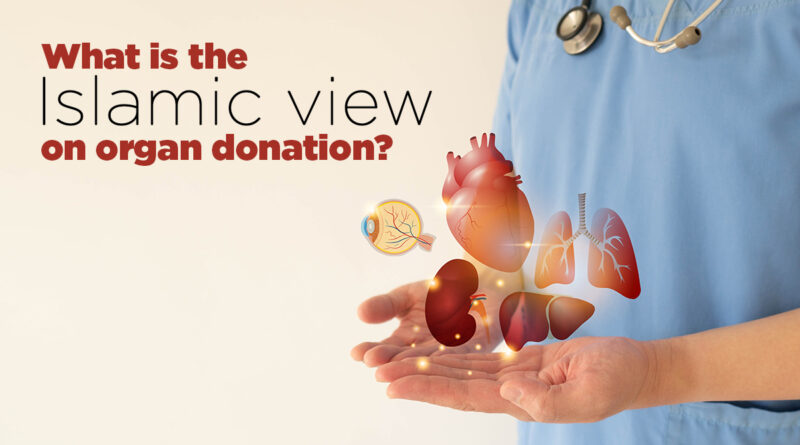
What is the Islamic View on Organ Donation?

Modern medicine has saved countless lives over the years, yet its advancements have raised complex ethical and religious questions. One such predicament is organ donation. Being a Muslim, our decisions about the body are not just medical or emotional; they are deeply connected to our faith, sense of accountability, and the sanctity granted by Allah (سُبْحَانَهُ وَتَعَالَى). As a result, many Muslims wonder whether donating or receiving organs is aligned with Islamic teachings or contradicts them.
Islam is a complete way of life that provides a clear set of principles for navigating new challenges, even those not explicitly mentioned in the classical texts. Scholars have to rely on the Qur’an, the Sunnah of Prophet Muhammad (ﷺ), and the established principles of Islamic jurisprudence to address modern issues. Organ donation is one such issue where scholarly discussion, differences of opinion, and ethical reasoning play a vital role.
The Sanctity of the Human Body in Islam
Islam has always placed immense importance on the dignity and sanctity of the human body. The human body is considered a trust (Amanah) from Allah (سُبْحَانَهُ وَتَعَالَى), not something that is owned by any individual absolutely. This applies both during life and after death.
Allah (سُبْحَانَهُ وَتَعَالَى) honoured human beings and elevated their status among all creation. This honour extends to physical integrity, meaning that harming or disrespecting the body without any valid justification is prohibited. Prophet Muhammad (ﷺ) emphasized this sanctity when he stated that breaking the bone of a deceased person is like breaking it while they are alive.
Because of this principle, early scholars were cautious about interfering with the human body. That said, Islamic law also recognizes situations of necessity and the preservation of life, which sometimes allow exceptions under strict conditions.
Preservation of Life: A Core Objective of Shariah
One of the most fundamental objectives of Islamic law is the preservation of human life. Islam has always encouraged saving lives and alleviating suffering wherever possible.
Allah (سُبْحَانَهُ وَتَعَالَى) states that saving a life carries great value. He equates saving one human life to saving all of humanity. This is mentioned in the Holy Qur’an and while this verse is general in wording, the scholars have always applied its principle to medical treatments and life-saving interventions.
Based on this objective, many scholars argue that if organ donation is directly contributing to saving a life or restoring vital bodily functions, it may fall under a commendable act, but only if Islamic boundaries are respected.
Scholarly Opinions on Organ Donation
Islamic scholars differ in their rulings on organ donation, mostly due to varying interpretations of bodily ownership, harm and necessity:
Opinion: Allowing Organ Donation (With Conditions)
A huge number of scholars and Islamic councils have listed strict guidelines, thereby permitting organ donation:
- Saving human life is of very high priority in Islam.
- Necessity may allow exceptions to general prohibitions.
- Donating an organ can be seen as an act of charity if it benefits another person without unjust harm.
Major Islamic institutions, such as international fiqah academies, have issued rulings allowing organ donation, especially when the donor has given written consent and no commercial or monetary transactions are involved.
Opinion Opposing Organ Donation
Some scholars, to this day, maintain a more rigid and restrictive approach. Their argument is:
- The human body belongs to Allah (Glory be to Him) and humans have no right to give away its parts.
- Mutilation of a human body is strictly prohibited, even after death.
- Certain medical uncertainties may lead to exploitation or unethical practices.
These scholars emphasize caution regarding posthumous donation and procedures that may violate human dignity.
Conditions for Permissibility in Islam
According to scholars in favour of organ donation, several conditions are essential and must be met at all costs:
- Genuine Necessity: Organ donation should be allowed only to address a serious medical need like saving a life or preventing severe disability. It should never be done for cosmetic or non-essential purposes.
- No Serious Harm to Donor: Living donors must never be seriously harmed. If the donation being made might render the donor disabled or put his life in danger, then organ donation must not be allowed. Islam does not allow destroying one life to save another.
- Free and Informed Consent: A donor’s consent must be of free will, without being coerced, pressurized or deceived. For deceased donors, prior consent or family approval must be obtained.
- No Commercial Gains: Selling organs is strictly prohibited in Islam. If a donor demands a monetary transaction as a personal gain against his donated organ, the donation is void in the view of Islam. The human body should never be treated as a commodity or a source of financial exploitation.
- Respect for Human Dignity: Medical procedures must be conducted with complete respect for human dignity, minimizing unnecessary harm or exposure.
Organ Donation After Death
Post-death organ donation is perhaps the most debated aspect of this matter. Contemporary scholars who permit organ donation often argue that once death is confirmed as per the most reliable medical standards, organ retrieval does not constitute harm, especially if it saves lives.
However, Islamic teachings put great emphasis on respecting the deceased. Funeral rites, prompt burial and dignity should never be compromised. Any procedure must remain within ethical and religious limits.
Receiving an Organ as a Muslim
Most contemporary scholars agree that receiving an organ is permitted if it is vital for survival or essential to health. There is no sin for the recipient if the donation process meets Islamic guidelines completely. Even if the donor is non-Muslim, most scholars permit receiving organs, but only because saving lives transcends religious boundaries.
Ethical and Spiritual Considerations
Beyond legality, Muslims are encouraged to think spiritually before making such decisions and acting upon them. They must consult scholars, medical experts and family members. Intention plays a most vital role in all this. If the intention is to please Allah (سُبْحَانَهُ وَتَعَالَى) by helping other human beings, most scholars consider this a noble act.
Final Thoughts
Organ donation remains a complex issue in Islamic jurisprudence. Ethics, principles, medical realities and scholarly interpretations shape this issue after contemplating the on-ground situation and reality. Although there is no single ruling, a strong body of scholarly opinion permits it under carefully defined conditions. The preservation of life during this procedure must be given top priority.
Muslims should always approach this matter with great care after getting all the relevant knowledge. Islam does not close the doors for medical advancement but ensures that the progress being made is strictly within the Islamic boundaries.


![[Podcast] The Parts of Being an Imam They Don’t Warn You About | Sh Mohammad Elshinawy](https://themuslimpress.com/wp-content/uploads/2026/01/Podcast-The-Parts-of-Being-an-Imam-They-Dont-Warn-390x205.png)