
My parents died when my daughters were young. I didn't want our family history to disappear with them.
Three months after the birth of my oldest daughter, my mother died after a brief illness. A couple of years after that, my father died unexpectedly of a heart attack. When my second daughter was born, I was raising my kids in New York City without extended family. As political refugees from former Czechoslovakia, my only blood relative in the US was my brother, who lived across the country in California.
I struggled to manage two young children. Joining new mom groups helped ease some of my isolation, as did our pediatrician. I learned about feeding schedules and spontaneous smiles at four months. I found myself wondering what my mom would have shared about my early years. She had once told me: “You didn’t like napping.” My old baby photos couldn’t reveal more details.
A harder challenge was the feeling that my children’s heritage was slipping away. Growing up in San Diego, we had spoken Czech at home. My parents sang nursery rhymes from their childhood and read fairy tales like “Three Hazelnuts for Cinderella.” Holidays were also celebrated in ways most familiar to them, including baking elaborate Christmas cookies. I tried to pass this on to my daughters.
Finding ways to share family traditions was hard
The first Christmas, trying to recreate the cookies from my upbringing, I opened my mom’s recipe book. Immediately, I felt discouraged. Written in Czech, the recipes used Celsius and vague metric measurements, assumed I owned a nut grinder, and included notes on mixing flours to get the ideal consistency. I wanted to avoid the baking, but each year I tried, it became easier.
Courtesy of the author
Even more daunting was the thought of one day explaining why my parents had left their homeland, believing they would never return. The night Václav Havel, the first president of the Czech Republic, died, I watched the coverage from Prague on my laptop. To my parents, he was proof that what they believed in had been right. Sharing this background seemed hard, and I hoped I would be able to do it in the future.
My kids needed to be part of a community to better understand their background
Without my parents, I was the only link to our past, and it wasn’t enough. The first step was finding a native speaker. Going through an agency that could do a formal search was beyond my budget. Instead, I posted on a private online parenting forum.
Responses were slow to come in, and I wondered if I was being realistic. Finally, we met the perfect candidate, who became a lifelong friend. Nicknamed Wonka, a mispronunciation of her real name by my oldest daughter, she was willing to sing nursery rhymes, tell traditional fairy tales, and read for hours from Czech-language books. She also suggested cartoons and movies that were now accessible on the internet.
Courtesy of the author
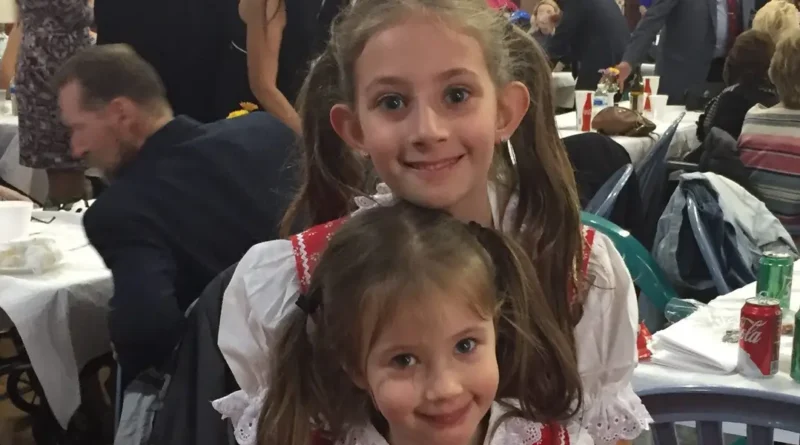
Once my kids were old enough, I signed them up for Saturday classes at a Czech school held at a club started by immigrants over 100 years ago. Once a week, they would read books, practice grammar, learn about the country’s history and geography, and sing in the choir. During the holidays, they made traditional crafts, such as painted Easter eggs. After classes, my kids stayed for folk dance practice and performed in traditional costumes at local festivals.
It wasn’t easy to keep my kids motivated
As they got older, my daughters became increasingly resistant to attending the lessons. Despite having a core group of friends at school, traveling to Prague to meet extended family and practice their language skills, and even having relatives visit us in New York, they didn’t want to spend their weekends focused on a foreign language. They wanted to do what their other friends did — sleep in, hang out, and go shopping.
Then, in high school, the oldest one said she wanted to spend a summer at a sleepaway camp near Prague. I had been suggesting the camp for a few years, unsuccessfully.
Courtesy of the author
Located by a river, the grounds consisted of unheated cabins with shared bathrooms. There were six girls to a room. After overcoming her fear of making mistakes and winning an endurance race, she became fast friends with her bunkmates.
When she said she wanted to return the following year, I knew something had shifted.
Knowing their background has brought us closer
As my children have gotten older, they understand more about their grandparents and have become interested in their family history. When we visit, we may tour Prague Castle, but just as important, we see the building where my parents lived before leaving, the colleges where they studied, and we eat their favorite foods.
When my kids ask me questions about their grandparents, I don’t have all the answers, but I’m glad we can research them together. Even though it was hard, it was worth the effort to connect them to their heritage.