
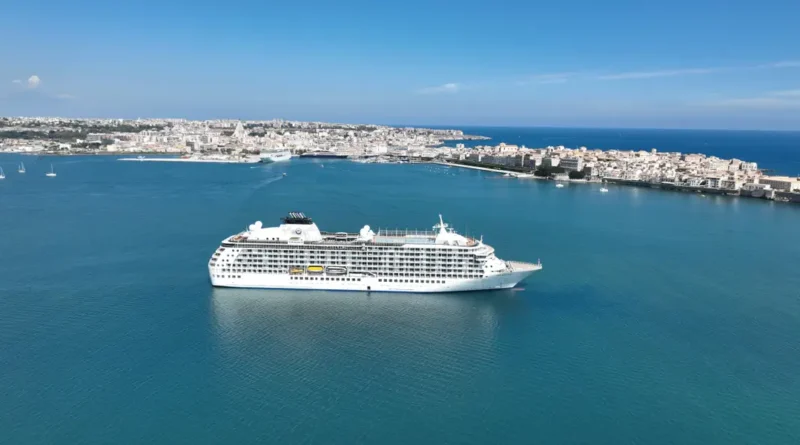
Residential cruising is a notoriously tricky business. One 24-year-old ship has beaten the odds.
Villa Vie’s collapse revived a familiar industry-wide question: can residential cruising actually work, or is it merely an expensive fantasy?
Jessica Hoppe, the CEO of the only operational residential cruise ship, told Business Insider that The World’s nearly 25 years at sea show that it can.
Villa Vie’s “never-ending” residential cruise came to an abrupt halt in late October, when the company suspended operations, leaving residents of its Odyssey ship stranded in Cambodia. It followed months of changing itineraries, deteriorating services, and fundraising efforts that signaled its financial troubles, as Business Insider reported.
Other residential-cruise ventures have struggled, too. Victoria Cruises Line’s Majestic has faced repeated delays and is yet to set sail. Its owner, Viktória Takács Ollram, told Business Insider that it remains active as a venture and that the company has decided to wait until it reaches 80% occupancy to “ensure the long-term financial sustainability of our residential cruise program.”
Storylines, another aspiring residential-cruise company, has yet to launch a ship. It initially planned the MV Narrative’s maiden voyage for 2019 but has repeatedly delayed it, most recently to 2028. Life at Sea, a proposed world residential-cruise involving Villa Vie cofounder Mikael Petterson, never launched.
For Petterson, Villa Vie’s demise underscored the model’s challenges. “Nobody that’s tried residential cruising has succeeded, and we’ve gone further than anyone else,” he told Business Insider last month.
Hoppe said The World has succeeded where others have failed, in part because residents can review its finances, help shape its direction, and because there’s a long-term operating plan.
“There’s a big barrier to entry — building a ship is an expensive endeavor — but then, of course, operating it successfully is quite another story,” she said. “But that’s what we’ve been able to do.”
The World’s residences cost upward of $3.5 million
The World’s residents own its 165 apartments, as well as the vessel and its management companies. As a not-for-profit operation, residents’ payments go toward the ship rather than outside investors.
The World, which describes itself as a residential yacht, relies on an exceptionally affluent group of owners. While Odyssey cabins sold for between $119,999 and $439,999, residences on The World cost between roughly $3.5 million for a studio and $15 million for a three-bedroom apartment. Annual operating costs are up to 10% of a residence’s purchase price, Hoppe said, at least $350,000 a year for the least expensive homes.
Courtesy of The World
Hoppe said those payments fund the costly work of operating a ship over decades, including repairs, upgrades, and dry docks every three years. They also contribute to the crew’s compensation, fuel, a food and beverage allowance, as well as the maintenance of a spa, a full-size tennis court, and a movie theatre, among other onboard facilities. “Literally all of the dollars collected are spent on the operations or the enrichment of the experience for the residents,” she said.
Peter Antonucci, who lived on The World for six years, previously described the experience to Business Insider as “the Four Seasons on steroids.”
Read more of our Villa Vie reporting
While it might not be possible for other residential-cruise ventures to attract such affluent residents, Hoppe said she believes financial transparency may help others succeed.
Residents can review The World’s financial statements, participate in its audit committee, and see what they will be expected to pay to operate and maintain the ship. “We’re very transparent,” she said. “This is their home. Our financials are posted to our residents.”
For Odyssey residents, the clearest signs of Villa Vie’s financial distress came in the form of urgent calls for cash and loans in its final months. In an August memo, Villa Vie cofounder Kathy Villalba said the company had reached a “critical point,” Business Insider previously reported.
Hoppe said The World’s regular financial disclosures and resident oversight make it “highly unlikely” that those onboard would ever be caught off guard by a sudden disembarkation like the Odyssey’s.
Courtesy of The World
A long-term operating plan also plays a part in The World’s success, according to Hoppe. The World’s management sets its itineraries three years ahead, which residents committees vote on. This enables them forecast the ship’s fuel needs and hedge a year in advance.
Villa Vie, by contrast, lacked the scale to hedge fuel prices, Petterson previously told Business Insider, a constraint that led to repeated itinerary changes in the Odyssey’s final months. Hoppe said The World’s itineraries have only ever changed due to the weather or technical issues.
Fuel hedging was not the only advantage The World had over ventures like the Odyssey, Hoppe said. The Odyssey was a three-decade-old passenger ship that Villa Vie had to retrofit for residential life, whereas The World was purpose-built for residents. “Building a ship in and of itself is very expensive, but to retrofit a ship to be residential, that’s just an added complication,” Hoppe said.
In 2024, mechanical problems, including repairs to the ship’s aging rudder, kept the Odyssey in dry dock in Belfast for months longer than planned, delaying its departure.
‘Don’t just look at launching the ship’
The World may have survived for 24 years, but it hasn’t been plain sailing. The cruise line ResidenSea launched it in 2002 using a hybrid model: its upper decks featured apartments, while revenue from cabins for traditional cruise passengers on the lower decks would cover operating costs. Hoppe, who joined The World in 2022 and became CEO in 2024, said the model didn’t work, partly because it failed to generate enough revenue.
In 2003, a year after its maiden voyage, its residents came together to buy The World from investors, which last month inspired a failed attempt by Odyssey residents to buy the ship.
For those tempted by the promise of living at sea, Hoppe said the key question is not whether a company can launch a ship, but whether it has a viable plan to operate one for many years.
Prospective residents should ask how a venture is funded, what commitments it has made to lenders and shipyards, and whether it has planned for at least the next five years, she said.
“Don’t just look at launching the ship,” Hoppe said. “Look at what the sustained operations are going to look like.”
In residential cruising, it’s one thing to launch the dream, and another to keep it afloat.