
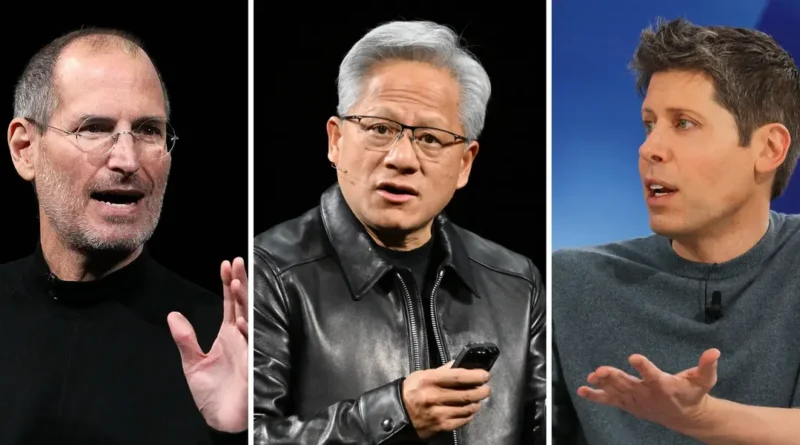
Jensen Huang joins the small club of ousted founders who got their jobs back
Steve Jobs, Apple’s cofounder and chairman, was first pushed out by the person he had recruited to run the company.
In 1985, then-CEO John Sculley and Apple’s board stripped Jobs of his operational responsibilities after a power struggle over the company’s strategy, amid slowing Macintosh sales. Jobs remained chairman but soon resigned, leaving to start the computer company NeXT.
More than a decade later, Apple came calling. The company announced a roughly $400 million deal to buy NeXT in December 1996 and completed the acquisition in February 1997, bringing Jobs back as an advisor.
Jobs became Apple’s de facto leader after Gil Amelio’s departure in July 1997. Apple announced his appointment as interim CEO that September, setting the stage for a monumental turnaround.
The colorful iMac, launched in 1998, helped sustain the company’s profitability. He then took the company beyond computers, introducing the iPod in 2001 and the iTunes Music Store in 2003, before unveiling the iPhone in 2007 and the iPad in 2010.
Jobs resigned as CEO in 2011 amid long-standing health problems, including a rare form of pancreatic cancer. By then, Apple had grown from a roughly $2 billion company when Jobs returned to one worth about $350 billion.