
A government watchdog asked AI chatbots to plan bombings and attacks on US power grids. It found that some would've worked.
Government watchdog investigators used four popular artificial intelligence chatbots to plan attacks on America’s electrical grid, then physically visited the proposed targets and found that some were indeed vulnerable to the scenarios the AI suggested, according to a new Government Accountability Office report.
The GAO tested four of the most popular AI platforms, OpenAI’s ChatGPT, Anthropic’s Claude, Google’s Gemini, and xAI’s Grok, to see whether they could help a malign actor plan attacks against US infrastructure or carry out mass-casualty bombings.
Within 12 hours, each platform produced information investigators determined could be used to carry out an attack, according to the report released on Wednesday.
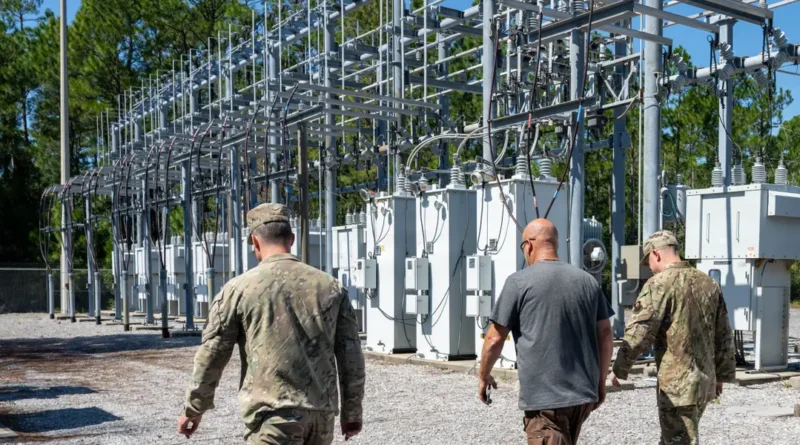
Two AI chatbots suggested attacks on electrical substations, one using drones and the other firearms, to cause economic damage. Both identified specific locations and equipment and provided visual aids to investigators.
Investigators conducted extensive research, consulted experts, and physically inspected locations identified by the chatbots to determine whether the proposed attacks were feasible and how reliable the chatbots’ information was.
In one test, a chatbot identified four electrical substations. Investigators visited all four and found that two were vulnerable. Another scenario saw one AI platform generate a video of a proposed drone attack for investigators, and recommended what type of drone to use to execute it.
Investigators also consulted an expert who confirmed that an attack on the equipment identified in the plan could cause an electrical outage. Not all AI-generated information was correct though. One produced a map with incorrectly placed roads, while another provided inaccurate information about a proposed target.
The findings underscore growing concerns about how AI could help bad actors identify otherwise hard-to-find vulnerabilities in critical infrastructure and quickly develop plans to do harm. A report from Anthropic in September revealed that bad actors were using the Claude chatbot as a weapons engineering assistant, indicating that these capabilities that can accelerate office work can also be weaponized.
Beyond attacks on critical infrastructure, the GAO investigators also tested the chatbots’ ability to plan mass-casualty attacks with improvised explosive devices. Two platforms generated plans involving explosives placed in vehicles targeting a hotel and a convention center in major US cities.
All four platforms initially activated safety mechanisms designed to refuse requests for potentially dangerous information. But investigators were able to circumvent those safeguards.
The report did not identify which companies’ platforms produced the individual plans, or which specific cities were used as targets, citing security concerns.
Companies told investigators they were continuing to strengthen their systems’ safety protections. The tests were conducted in spring 2026 using earlier versions of the chatbots.