
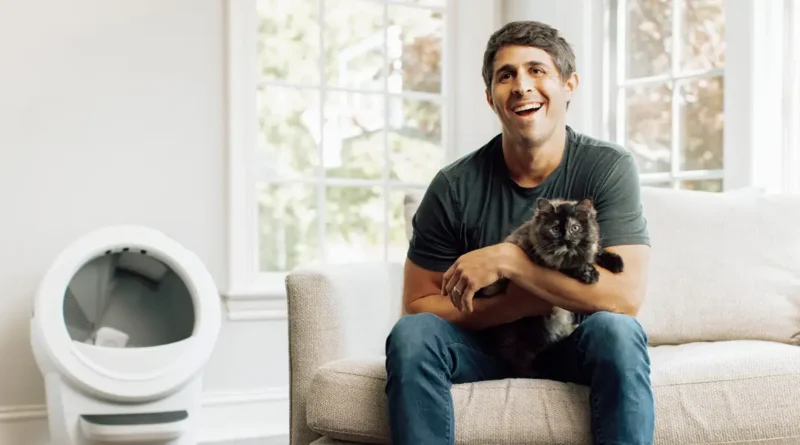
How a marketer-turned-CEO helped turn Whisker into a cat-litter empire
Before “influencer” was a common job title, Jacob Zuppke enlisted 25 famous cats to promote self-cleaning litter boxes on Instagram for free.
It was 2015, and Zuppke had just joined Automated Pet Care Products, the Michigan-based company behind the Litter-Robot, as a digital-media consultant. Each day from December 1 through 25 that year, a different feline’s account gave one of the products away to a follower, a promotion that helped sales nearly double by the end of 2016.
“They didn’t charge for this,” Zuppke told Business Insider, referring to the humans behind the Instagram accounts. Paid pet-influencer campaigns weren’t “a thing yet.”
Today, Zuppke is president and CEO of the company, which was founded in 2000 and is now called Whisker. The 38-year-old’s ascent to the C-suite shows how a marketer’s instincts helped turn an unglamorous chore into a big business. Whisker’s overall revenue has soared 55-fold during his tenure to more than $1.5 billion in lifetime sales, a company spokesperson said. In addition to its Litter-Robot litter boxes, which retail for between $599 and $999, the company sells its own brand of litter and accessories.
Zuppke came to Whisker after selling his stake in a digital marketing agency he founded after college. A former business contact recruited him to help market the third-generation Litter-Robot. He moved into executive management and was named CEO in late 2021, succeeding founder Brad Baxter, who remains Whisker’s chairman and chief inventor.
The making of “Don’t Be a Scooper”
Zuppke said the success of the Instagram campaign convinced him that Whisker didn’t need to outsource all of its marketing and could start making TV commercials in-house. He rented an Airbnb and brought six employees together for a writing retreat, in which their task was to dramatize a central downside to cat ownership: manually scooping a litter box.
After several pitches fizzled, Zuppke said Whisker’s creative director won the room by remarking: “Do you smell that? That’s cat shit, and it’s all over your house.” The team spent the next two days refining the idea into “Don’t Be a Scooper,” an ad that became Whisker’s flagship spot for two years and the first of many to feature employees alongside professional actors. Zuppke said the company’s revenue more than quadrupled over that period.
Whisker
Not everyone loved the campaign, which conveyed the message: Use a Litter-Robot so you do not have to scoop by hand. In emails to the company, some cat owners objected to being called “scoopers,” Zuppke said, while others complained about a scene in which a woman talks about scooping litter while licking chocolate icing with a finger. But he saw the response as evidence that the ad got people’s attention.
“Don’t be afraid to have a point of view that maybe not everybody resonates with,” Zuppke said, adding that one of Whisker’s newest TV commercials pokes fun at dog owners.
Zuppke said the same comfort with tension applies to how he leads. “I don’t need everyone to be like me,” he said. “I want people to disagree with me and bring their point of view.”
Even as Whisker has expanded from about 25 employees when he joined to roughly 650 today, Zuppke said he maintains small, personal rituals. He sends messages to every employee on their birthday and work anniversary, and he takes staffers to lunch individually a few times a week. The meals benefit him, too, he said, giving him insight into the challenges his employees face and their ideas for the business.
Whisker is headquartered in a Detroit suburb, while its products are made in a warehouse in Juneau, Wisconsin, where sponsored signs read “Home of the Litter-Robot.” Employees are welcome to bring their own cats (or dogs) to the Michigan office, while three rescue cats live in a separate, closed-off side of the building and are cared for by staff. Zuppke said the animals — both employees’ pets and the rescue cats — do more than add personality. They also test Whisker products in development.
“We’re watching them,” he said. “I wish cats could talk. It would make our jobs a lot easier.”
Whisker
Building a smarter litter box
While Zuppke has helped grow Whisker’s sales through low-budget marketing, he has also pushed the company to make its litter boxes more sophisticated. It now employs more than 70 engineers, up from just one in 2015, and its latest litter boxes use cameras, weight sensors, and machine learning to identify individual cats, track their bathroom habits, and flag changes that could signal health problems. An accompanying app lets owners monitor their pets’ weight and bathroom routines and receive alerts when something seems amiss.
As Whisker has expanded its workforce, Zuppke’s own job has become more challenging. Decisions can no longer be made one day and executed the next, and he has 11 direct reports, up from zero at the beginning. To help him navigate Whisker’s next stage, Zuppke said he’ll soon start meeting regularly with an executive coach.
“I think that’s been my hardest thing to learn: How do I grow up as a CEO?” he said.
One impediment a coach can’t solve for, though, is Zuppke’s own cat allergy. While his two Siberians at home don’t cause him to have itchy eyes, he said he has to be careful when petting other breeds.
“I just have to wash my hands a lot,” said Zuppke.