
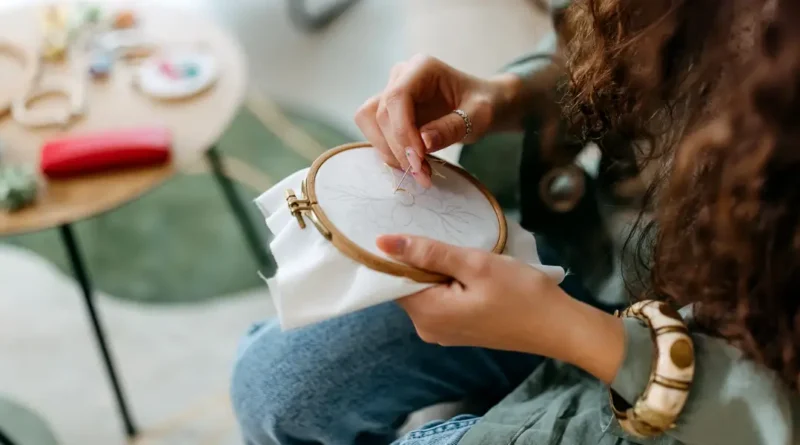
After 2 divorces, I spent 2,000 hours cross-stitching and learned to let go of perfection
When my second marriage fell apart, I became obsessed with what I could have done differently. Alone in a deafeningly quiet house that had once been filled with my husband and three stepchildren, I replayed conversations and glaring warning signs.
My best friend brought me a beginner’s cross-stitching kit. It seemed the worst possible match for my mental state: an exacting, painstakingly slow process of impaling an open-weave cloth in fussy X-shapes where a single miscounted thread can ruin the entire pattern hundreds of hours later.
But I was desperate for something to occupy my mind other than the dissolution of my family. I gave it a try.
This hobby requires painful precision
While my friend sat on the couch next to me making progress on an elaborate winter scene, I clumsily punched my needle through the fabric with an overhead light blaring down so I could see clearly. I counted once, then twice, then checked a third time just to make sure I wouldn’t make a mistake.
My little scene that said “Happy Camper” came into view as I moved between a pine tree, lettering, and a small camping vehicle. Within a couple of hours, I was finished and proud of the small accomplishment that had effectively distracted me from my otherwise sullen state of mind.
I soon moved on to a more advanced project featuring a map of the United States, each state represented by a different pattern. Texas was a collage of flowers in pinks and teals whose intricate pattern tripped me up on multiple occasions.
Courtesy of Andrea Javor.
Sometimes I’d spend hours stitching before realizing I’d miscounted. I’d take scissors to the back, unravel my work, and frustratingly start again.
Every time I discovered a mistake, I wanted to give up altogether. I could spend an entire evening undoing a few misplaced stitches, convinced that anything less than perfect would ruin the whole project.
Concurrently, I did the same thing with my marriage as I mentally retraced my decisions as though I could somehow go back and change the outcome. I struggled to accept that some things couldn’t be fixed, regardless of how much effort I put in.
I learned that not every mistake can be undone
Eventually, I moved on to an outdoor scene and made a huge error that took me weeks to notice. By the time I discovered it, I’d already stitched so much of the surrounding pattern that unraveling the entire section seemed impossible. I momentarily considered abandoning the project altogether.
Instead, I surgically removed a whole section of the fabric and stitched in a clean piece of cloth. I worried the repair would be conspicuous — like a permanent reminder of how badly I’d screwed up — but as I continued working, I could barely detect the seam.
Courtesy of Andrea Javor.
I hadn’t considered the possibility that I could still end up with something beautiful, even if it was technically flawed. It was a lesson I desperately needed outside the confines of my embroidery hoop.
The mistakes I couldn’t erase became part of the picture
After more than 2,000 hours of cross-stitching, my nightly ritual has given me an unexpected framework for navigating life after divorce. I began to recognize the difference between mistakes worth correcting and imperfections I could simply learn to live with.
There is a counterintuitive psychological comfort in practicing an unforgiving hobby while trying to forgive myself. I can’t undo two failed marriages, but I can decide how much time and energy to spend dwelling on what had gone wrong.
I credit my creative pastime with laying the groundwork for a healthy relationship with my partner, Jason, that’s going strong for five years. The other night I sat next to him on the couch and unfurled my canvas, to which he commented, “Your creativity is still one of my favorite things about you.”
It’s now easier to see the whole beautiful picture.